Workplace Anxiety Test: Signs & Management
The modern workplace demands peak performance, but what happens when constant pressure transforms from motivation into overwhelming anxiety? You're not alone if you've noticed racing thoughts before meetings, difficulty concentrating on tasks, or a physical tension that follows you home. This struggle is real and widespread, affecting countless professionals who silently wonder if what they're feeling is "just stress" or something more.
Understanding the difference is the first step toward regaining control and well-being. Do you feel like your job is impacting your mental health? This article will help you recognize the clinical signs of workplace anxiety, distinguish them from normal job stress, and provide practical strategies to manage them. We'll also explain how a validated assessment tool can offer clear, personalized insights into your unique situation. For an immediate and confidential evaluation, you can always use our free anxiety test.
Recognizing Workplace Anxiety Symptoms (Beyond Normal Stress)
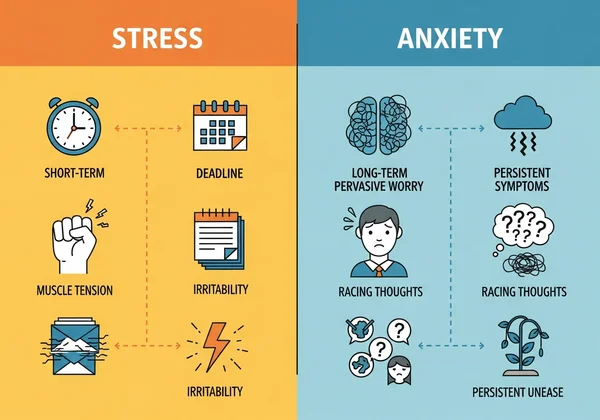
It's crucial to understand that stress and anxiety are not the same. Stress is typically a short-term response to specific challenges, like tight deadlines. Anxiety, however, can persist even after the stressor is gone. It's a state of prolonged worry that can disrupt your daily life, both at work and at home. Identifying the specific symptoms is key to understanding what you are experiencing.
Physical Manifestations of Workplace Anxiety
Anxiety isn't just "in your head." It creates real, physical reactions in your body as part of the "fight or flight" response. When this response is constantly activated by workplace triggers, you might experience persistent physical symptoms. These are not signs of weakness; they are physiological signals that your nervous system is overloaded.
Common physical signs include:
- Persistent Muscle Tension: Chronic tightness in your neck, shoulders, or back.
- Headaches or Migraines: Frequent tension headaches that worsen during stressful work periods.
- Stomach Issues: Nausea, indigestion, or irritable bowel syndrome (IBS) flare-ups.
- Increased Heart Rate: A racing or pounding heart, sometimes even when sitting at your desk.
- Fatigue: Feeling exhausted despite getting enough sleep, as your body is constantly in a state of high alert.
Cognitive and Emotional Red Flags
Workplace anxiety profoundly affects your thoughts and feelings, often creating a cycle that is hard to break. Cognitively, it can impair your ability to perform your job effectively. Emotionally, it can drain your sense of satisfaction and confidence.
Look out for these cognitive and emotional indicators:
- Constant Worry: Obsessively thinking about work performance, mistakes, or interactions with colleagues.
- Difficulty Concentrating: Finding it hard to focus on tasks, feeling like your mind is "blank," or being easily distracted.
- Irritability: Feeling unusually impatient or snappy with coworkers or even family members.
- Fear of Judgment: An intense fear of being negatively evaluated by superiors or peers.
- Avoidance: Procrastinating on challenging tasks or avoiding social situations at work, like team lunches or presentations.
When Regular Job Stress Becomes Clinical Anxiety
Everyone experiences job stress. It's the pressure that helps you meet a deadline or prepare for a big presentation. However, it becomes a potential anxiety disorder when it is excessive, persistent, and disproportionate to the situation. The key difference lies in duration and impact.
Stress is temporary and tied to a specific event. Anxiety lingers and can feel pervasive. If your symptoms persist for weeks or months, interfere with your ability to function at work or home, and cause significant distress, it may have crossed the line from normal stress into a clinical issue. Understanding this distinction is why an objective assessment can be so helpful. A confidential anxiety level test can give you a clearer picture.
The Science Behind Workplace Anxiety: GAD7 Assessment at Work
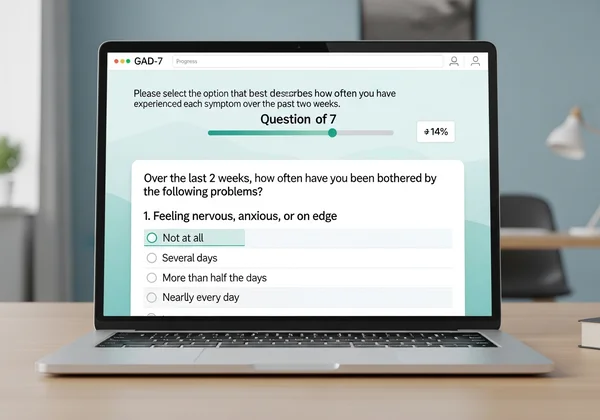
To accurately measure anxiety, mental health professionals often use scientifically validated screening tools. One of the most common and respected is the GAD-7 (Generalized Anxiety Disorder 7) scale. This tool is designed to quickly and reliably screen for the presence and severity of anxiety symptoms. It provides a numerical score that helps quantify what can often feel like an overwhelming and vague experience.
Understanding the GAD7 Scale in Professional Contexts
The GAD-7 consists of seven questions about how often you've experienced various anxiety symptoms over the past two weeks. These questions cover core aspects like feeling nervous, being unable to stop worrying, and having fears that something terrible might happen. In a professional context, this scale helps contextualize your feelings about work.
It's not just about "feeling stressed." The GAD-7 helps identify if your work-related stress is manifesting as clinically significant anxiety symptoms. This objective data provides a solid foundation for understanding your mental state and planning your next steps, whether that involves self-help strategies or seeking professional guidance.
Workplace-Specific Anxiety Triggers Measured
While the GAD-7 questions are general, they are highly relevant to workplace anxiety triggers. For example, a question about "worrying too much about different things" relates directly to anxieties about deadlines, performance reviews, or job security. Meanwhile, a question about "becoming easily annoyed or irritable" can reflect the strain from difficult team dynamics or overwhelming workloads. The GAD-7 effectively measures the impact of these triggers on your mental well-being.
How to Interpret Your Workplace Anxiety Score
After completing a GAD-7 based test, you receive a score. This score is typically categorized into levels like minimal, mild, moderate, or severe anxiety. Understanding your score is empowering.
- A low score might validate that what you're feeling is manageable stress, and simple coping strategies could be effective.
- A moderate score suggests that your symptoms are notable and would likely benefit from more structured management techniques.
- A high score indicates that your symptoms are causing significant distress and strongly suggests it's time to consult a healthcare professional.
Your score is not a diagnosis. It's a snapshot of your current state—a tool to help you start a conversation and make informed decisions. To get a better sense of where you stand, you can start your test now.
Evidence-Based Strategies for Managing Workplace Anxiety
Recognizing the signs and understanding your anxiety level are the first steps. The next is taking action. Fortunately, there are many effective, evidence-based strategies you can use to manage workplace anxiety. These techniques range from immediate relief in a stressful moment to long-term adjustments that create a more sustainable work life.
Immediate Techniques for Anxiety Relief During the Workday
When you feel anxiety rising during a meeting or while facing a difficult task, you need tools that work quickly. These techniques can help ground you in the present moment and calm your nervous system.
- The 3-3-3 Rule: Look around you and name three things you see. Then, name three sounds you hear. Finally, move three parts of your body—your ankle, fingers, or arm. This simple technique pulls your mind away from anxious thoughts.
- Box Breathing: Inhale slowly for four counts, hold your breath for four counts, exhale for four counts, and hold again for four counts. Repeat this cycle several times to regulate your breathing and lower your heart rate.
- Mindful Moment: Step away from your desk for a few minutes. Go to a quiet space, grab a glass of water, or simply look out a window. Focus all your attention on that single, simple activity.