What Causes Anxiety: Biological, Environmental & Hidden Triggers
If you’ve ever found yourself asking, "Why is this happening to me?", you are not alone. Understanding what causes anxiety can feel like trying to solve a puzzle with missing pieces. Is it your genes? Your stressful job? Or is it simply how your brain is wired? The truth is rarely just one thing. Most anxiety stems from a complex mix of biological factors, environmental stressors, and psychological patterns. This guide unpacks the "why" behind your symptoms, moving beyond simple explanations to help you find clarity. By understanding the root causes, you can stop blaming yourself and start finding the right path forward, which might include taking an online anxiety test to gauge where you stand.
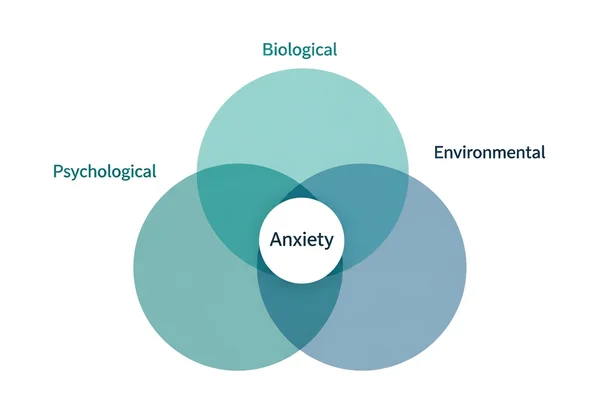
The "Big Three" Framework: Biological, Psychological, & Environmental Roots
Experts often use the "Biopsychosocial Model" to explain mental health. This sounds complex, but it simply means that what causes anxiety is usually a collision of three worlds: your body, your mind, and your life experiences.
The Biological Factor: Genetics and Family History
First, let's look at biology. Research consistently shows that anxiety disorders can run in families. However, this doesn't mean you are destined to have anxiety if your parents did. It simply means you might have a genetic predisposition. Think of it like having fair skin; you aren't guaranteed to get a sunburn, but you are more susceptible to it than others. If your nervous system is naturally more sensitive, this biological foundation is often a key piece of what causes anxiety for you, influencing how intensely you react to stress.
The Psychological Factor: Personality Traits and Coping Styles
Your personality also plays a part. People who are perfectionists, highly sensitive, or naturally cautious may be more prone to anxiety. This isn't a flaw; it's a trait. For example, if you have a "Type A" personality, your drive to succeed is a strength, but it can also create immense internal pressure. Psychological factors often involve how we interpret the world. If you tend to view uncertain situations as dangerous rather than challenging, that perception becomes part of what causes anxiety to persist in your daily life.
The Environmental Factor: Trauma, Chronic Stress, and Upbringing
Finally, your environment acts as the trigger. This includes everything from your current work environment to your childhood upbringing. Environmental risk factors are powerful. Experiencing trauma, abuse, or neglect in childhood can sensitize your brain's alarm system, making it reactive long into adulthood. Even positive life changes, like a promotion or a new baby, can act as environmental stressors that tip the scale toward anxiety.
What Causes Anxiety in the Brain? (The Neuroscience)
It can be validating to know that anxiety isn't just "in your mind"—it is a physical event happening in your brain. When we look at what causes anxiety from a neuroscientific perspective, we see specific mechanisms at work.
The Amygdala’s Role as the Body's "Smoke Detector"
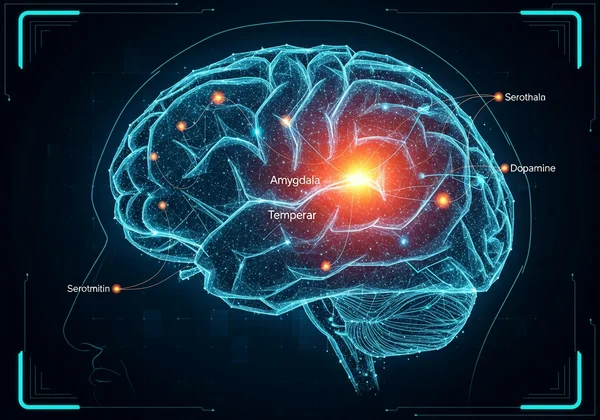
Deep inside your brain lies an almond-shaped structure called the amygdala. Its job is to detect danger. In people with anxiety, the amygdala is often hyperactive. It’s like a smoke detector that is too sensitive; it goes off not just when there is a fire, but also when you burn toast. This hyperactive amygdala anxiety role triggers the famous "fight or flight" response, flooding your body with adrenaline even when you are safe sitting at your desk.
Chemical Imbalances: Serotonin, Dopamine, and Cortisol
Your brain relies on chemical messengers called neurotransmitters to regulate mood.
- Serotonin: Helps regulate mood, sleep, and appetite. Low levels are often linked to anxiety.
- Dopamine: Involved in pleasure and reward.
- Cortisol: The primary stress hormone. When these chemicals are out of balance, communication between brain regions falters. For instance, if cortisol remains chronically high due to stress, it keeps your body in a constant state of high alert. These chemical fluctuations are frequently cited as what causes anxiety symptoms to feel physically overwhelming, making it difficult to relax.
10 Common Triggers That Can Spark a Flare-Up
Sometimes the cause isn't a deep-seated trauma but a daily habit or a physical issue. Identifying these triggers is often the quickest way to find relief.
Lifestyle Triggers: Caffeine, Sleep Deprivation, and Blood Sugar
Small habits accumulate.
- Caffeine: A stimulant that mimics adrenaline. For sensitive individuals, a second cup of coffee can induce jitteriness that the brain interprets as panic.
- Sleep: Lack of sleep increases cortisol, lowering your threshold for stress the next day.
- Diet: Skipping meals leads to low blood sugar (hypoglycemia), which causes shaking and irritability that feels exactly like an anxiety attack.
External Stressors: Work Pressure, Conflict, and Major Life Changes
External pressure is an obvious culprit. High-stress jobs, financial insecurity, or relationship conflicts keep your nervous system on edge. Interestingly, "good" stress—like planning a wedding or moving to a new city—counts too. Your brain processes the uncertainty of change as a potential threat, regardless of whether the change is positive or negative.
Medical & Physical Mimics: Thyroid, Gut Health, and Medications
Before assuming your anxiety is purely psychological, it is crucial to consider physical health.
- Thyroid: An overactive thyroid (hyperthyroidism) speeds up your metabolism and heart rate, mimicking panic.
- Hormones: Fluctuations during PMS, pregnancy, or menopause can trigger significant anxiety symptoms.
- Gut Health: Emerging research on the gut-brain axis suggests that an imbalanced microbiome (gut bacteria) leads to inflammation, which may be what causes anxiety for some individuals.
- Medications: Certain asthma inhalers, ADHD medications, and even decongestants list anxiety as a side effect. Always consult a doctor to rule out these physical thyroid and anxiety symptoms.
Why Do I Feel Anxious for No Reason? (Understanding the Loop)
One of the most frustrating experiences is feeling panic wash over you when you are seemingly calm. You might ask, "Why do I feel anxious for no reason?" The answer often lies in the subconscious.
The Role of Subconscious "Micro-Triggers"
Your brain processes information faster than your conscious mind. You might have smelled a scent that reminded you of a past trauma, or heard a tone of voice that signaled danger in your childhood. These "micro-triggers" bypass your logical brain and hit the amygdala directly. You feel the fear before you know why. This is a common aspect of anxiety for no reason.
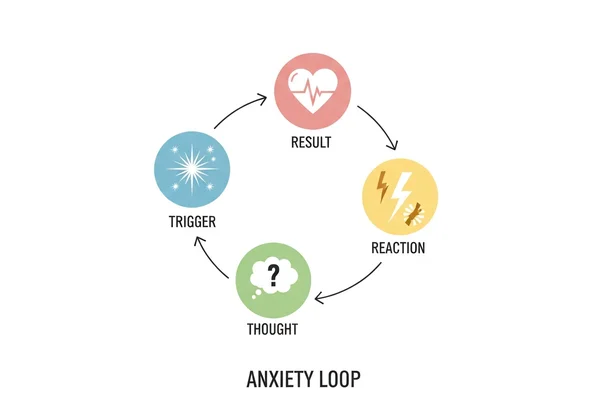
Visualizing the Loop: Trigger → Thought → Physical Reaction
Anxiety often feeds itself.
- Trigger: You feel a slight heart palpitation.
- Thought: "What if I'm having a heart attack?"
- Reaction: Your body releases more adrenaline.
- Result: Your heart beats faster, confirming your fear. This loop creates a spiral where the fear of symptoms becomes the cause of the anxiety itself.
Delayed Reactions: When Stress Hits You Later
Sometimes, anxiety is a delayed response. You might handle a crisis at work perfectly, running on adrenaline. Then, two days later, while relaxing on the couch, you have a panic attack. This is your body finally processing the accumulated stress hormones. It’s not "random"; it’s just delayed.
Normal Worry vs. GAD: How to Tell the Difference
Everyone worries. However, understanding what causes anxiety also means knowing when normal stress has crossed the line into an anxiety disorder like GAD (Generalized Anxiety Disorder).
Key Differences: Intensity, Duration, and Control
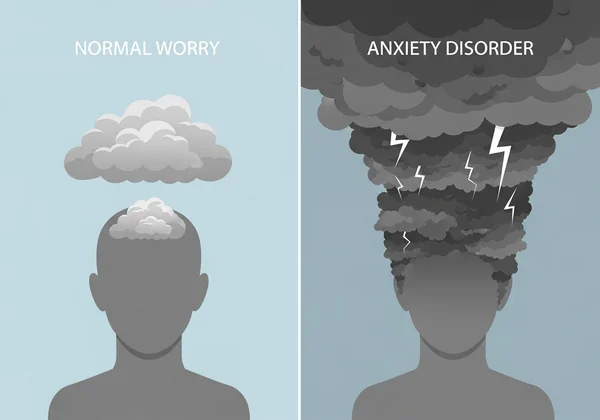
- Normal Worry: You worry about a specific problem (e.g., a bill), but once it's solved, the worry stops. You can still focus on other things.
- Anxiety Disorder: The worry is excessive, irrational, and hard to control. It persists even when there is no immediate threat. It feels all-consuming and disproportionate to the actual event.
The Tipping Point: Signs Your "Trigger" Has Become a Disorder
You may want to pay attention if:
- Your anxiety causes physical symptoms (headaches, nausea, fatigue).
- You start avoiding places or activities to prevent anxiety.
- The worry has lasted for more than 6 months.
- You feel constantly "keyed up" or on edge.
Assessment Tools: Using Data to Understand Your Symptoms
If you are struggling to distinguish between typical stress and a potential disorder, using an objective screening tool can provide clarity. It helps you quantify what you are feeling. You can try our anxiety assessment to see if your symptoms align with patterns of GAD. This isn't a diagnosis, but it is a powerful way to validate your experience and decide on the next step.
Identifying Your Root Cause is the First Step
Pinpointing what causes anxiety in your specific case is rarely about finding a single "smoking gun." It is usually a combination of your biology, your environment, and how your brain processes stress. By identifying your unique triggers—whether they are caffeine, unresolved trauma, or a hyperactive amygdala—you gain power over them. Knowledge reduces fear. Once you understand the mechanics of your anxiety, it becomes less of a mystery and more of a manageable challenge.
If you are ready to gain more insight into your symptom severity, consider exploring our comprehensive anxiety guide or taking the anxiety assessment mentioned above.
Frequently Asked Questions
Can vitamin deficiencies cause anxiety?
Yes, deficiencies in Vitamin D, B12, and Magnesium have been linked to increased anxiety and mood instability. These nutrients support nervous system function, and lacking them can leave you feeling more susceptible to stress.
Is anxiety hereditary from the father or mother?
Anxiety can be inherited from either parent. However, it is not a guarantee. You inherit a predisposition or vulnerability to anxiety, but environmental factors (like upbringing and life stress) play a huge role in whether that genetic potential is activated.
Can thyroid problems mimic anxiety?
Absolutely. An overactive thyroid (hyperthyroidism) can cause symptoms that are nearly identical to an anxiety attack, including rapid heartbeat, sweating, trembling, and nervousness. A simple blood test can rule this out.
Is there a link between gut health and anxiety?
Yes, the "gut-brain axis" is a major area of research. Your gut produces a large amount of your body's serotonin. An imbalance in gut bacteria (microbiome) contributes to inflammation and has been strongly linked to mood disorders, including anxiety.
Why is my anxiety often worse in the morning?
This is often due to the "Cortisol Awakening Response." Your body naturally spikes cortisol (the stress hormone) in the morning to wake you up. For people with anxiety, this spike can be exaggerated, leading to feelings of dread or panic immediately upon waking.
Can anxiety be cured if I find the cause?
Anxiety is typically "managed" rather than "cured" in the traditional sense. However, finding the root cause allows you to treat it effectively—whether through therapy, lifestyle changes, or medication—often reducing symptoms to a level where they no longer control your life.