Online Anxiety Test vs. Professional Diagnosis: When to Seek Help
The internet offers a world of information at our fingertips, including tools to better understand our mental health. Online anxiety tests are becoming a popular first step for many people who feel worried or overwhelmed. But a crucial question often follows that initial search: How does a quick online quiz compare to a professional diagnosis?
Understanding the difference is key to navigating your mental wellness journey responsibly. An online screening can be an incredibly valuable starting point, offering immediate, private insights into what you're feeling. A great first step can be a confidential anxiety test to get a clearer picture.
Let’s explore how online tests and clinical assessments work together to support your mental well-being.
Understanding Online Anxiety Tests: Your First Step
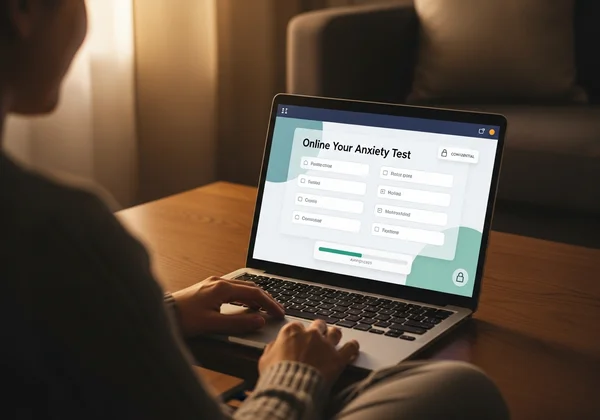
Think of an online anxiety test as a personal check-in. It’s a tool designed to help you quickly measure and understand your symptoms. It is not a final verdict on your mental health, but rather a snapshot of how you are feeling right now. These tests provide a private, accessible way to begin exploring your feelings without pressure.
What Our Confidential Anxiety Test Offers
Our platform offers a safe and insightful starting point. Our test is built on scientifically validated screening tools like the GAD-7 (Generalized Anxiety Disorder 7-item scale), which is widely used by clinicians. Here’s what makes it a helpful first step:
- Completely Anonymous: No registration or personal information is required. Your privacy is our top priority.
- Science-Backed: The questions are based on established clinical screening methods, ensuring the results are reliable and meaningful.
- Instant Results: You receive an immediate score that helps you understand the severity of your symptoms—from mild to severe.
- AI-Powered Insights: Beyond just a number, you can unlock a unique, personalized report that analyzes your strengths, challenges, and suggests actionable next steps.
The Benefits of Online Anxiety Screening Tools
Online screening tools have become essential resources for many, and for good reason. They effectively remove many of the initial barriers that can stop people from exploring their mental health.
The key benefits include:
- Accessibility: You can take a test anytime, anywhere, from the privacy of your own home.
- Anonymity: The fear of judgment or stigma is a major concern. Anonymous tests provide a safe space to be honest about your feelings.
- Speed and Convenience: Most tests take only a few minutes to complete, giving you immediate feedback to reflect on.
- Empowerment: Getting an objective score can validate your feelings and empower you to take the next step, whether that's self-care or professional consultation.
When Your Online Score Signals Deeper Concerns
Receiving your results from an online test can bring a sense of clarity, but it might also raise more questions, especially if your score is high. It’s important to see your score not as a label, but as valuable information. It's data that can help you decide what to do next.
Recognizing Red Flags: Symptoms That Warrant Professional Help
Online tests give you a score, but some symptoms demand action. If you experience frequent panic attacks or avoid social situations, it’s time to consult a professional.
Consider seeking help if you also experience:
- Anxiety that interferes with your daily responsibilities at work, school, or home.
- Persistent physical symptoms like a racing heart, shortness of breath, or stomach issues.
- A feeling that your worry is uncontrollable and present most days.
If your anxiety is causing you significant distress, a professional can help you find the best path forward.
Interpreting Your Anxiety Score: What Do the Numbers Mean?
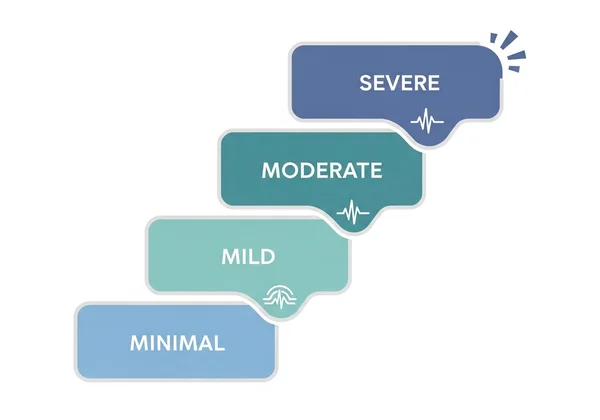
An anxiety score, such as one from a GAD-7 based tool, typically falls into a range: minimal, mild, moderate, or severe. Here’s a general way to think about it:
- Minimal to Mild: Your symptoms are present but may not be significantly disruptive. This is a good time to focus on self-care, stress management techniques, and monitoring how you feel.
- Moderate: Your symptoms are likely noticeable and have a consistent impact on your daily life. While not a diagnosis, this level suggests that talking to a doctor or therapist could be very beneficial.
- Severe: Your symptoms are likely causing significant distress and interfering with your ability to function. A high score is a strong indicator that you should prioritize speaking with a qualified healthcare professional.
Your score from an online anxiety test is a great tool to bring to a doctor. It provides a clear, objective summary of your symptoms to start the conversation.
Professional Diagnosis: What to Expect
Moving from an online test to a professional consultation can feel intimidating, but it doesn't have to be. A professional diagnosis is simply a more thorough and personalized process. It’s a conversation aimed at fully understanding your experience so you can get the right support.
Screening vs. Clinical Assessment: The Key Differences
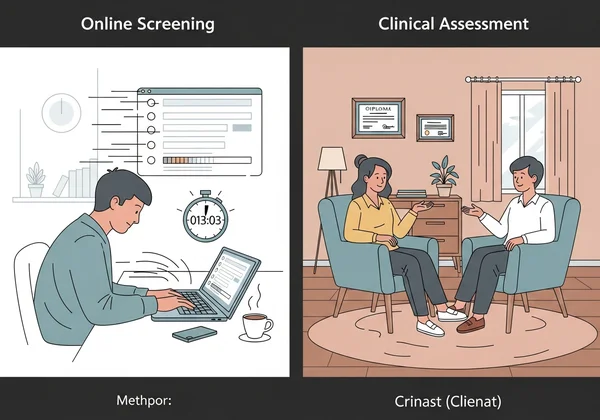
Online screenings and clinical assessments have distinct roles. One identifies possible concerns; the other confirms a diagnosis.
- A Screening Tool (like an online test): This is a brief questionnaire that identifies the possibility of a condition. It flags potential symptoms and their severity. It answers the question, "Should I be concerned?"
- A Clinical Assessment (a diagnosis): This is a comprehensive evaluation conducted by a qualified professional (like a doctor, psychologist, or therapist). It involves a detailed conversation about your symptoms, medical history, life circumstances, and overall well-being. It answers the question, "What is happening, and what can we do about it?"
A diagnosis is more than a label; it’s the key to a personalized treatment plan.
Preparing for Your Appointment: Questions to Ask Your Doctor
A little preparation helps your appointment stay focused. Bring your test results and jot down key symptoms beforehand.
Here are a few things you can do to prepare:
- Write down your main symptoms: When did they start? What makes them better or worse?
- List any major life stressors: Note any significant changes or challenges you're facing.
- Prepare a list of questions: Don't be afraid to ask for clarity.
Consider asking your doctor:
- Based on my symptoms, what do you think might be going on?
- What are the next steps for getting a formal diagnosis?
- What are the different treatment options available (e.g., therapy, medication)?
- Are there any lifestyle changes you recommend?
Bridging the Gap: Your Journey Towards Wellness
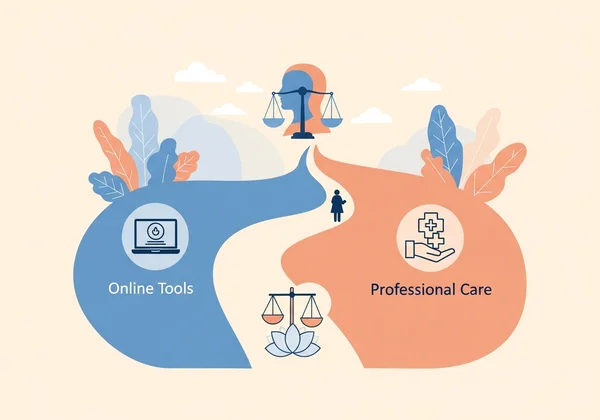
Your mental wellness journey is unique to you. Online tools and professional care are not opposing forces; they are partners in your path toward feeling better. Each plays a distinct and complementary role in helping you understand and manage your anxiety.
How Online Tests Complement Professional Care
An online anxiety test is a powerful ally, even after you decide to seek professional help. It serves as a bridge, connecting your private self-reflection with a productive clinical conversation.
Here's how it helps:
-
It organizes your thoughts: It can be hard to describe feelings of anxiety. A test provides a structured way to identify and communicate your symptoms.
-
It provides a baseline: You can use the tool to track your symptoms over time, which can be valuable information for you and your therapist.
-
It reduces uncertainty: Taking a test can give you the confidence you need to book that first appointment. It confirms that your feelings are valid and worth addressing.
Taking Action: Resources and Next Steps for Support
Knowledge is the first step, but action is what creates change. Whether your results indicate mild stress or more severe anxiety, there are always positive next steps you can take. Your journey starts with understanding where you are right now.
If you haven't already, take the first step with a free, confidential assessment. The personalized AI report can offer you concrete suggestions tailored to your situation. From there, you can explore self-care strategies or use your results to begin a conversation with a trusted healthcare provider.
The Takeaway
Navigating feelings of anxiety can be challenging, but you don't have to do it alone. Online tools, like our confidential screening, offer a safe, insightful, and empowering first step. They provide the clarity needed to understand your feelings and the confidence to decide what to do next.
Your test results are a map, not a destination. They empower you to take ownership of your mental health journey—whether that means practicing self-care or reaching out for support. If you are struggling with persistent worry or your symptoms are impacting your life, consulting a healthcare professional is the most effective and responsible path toward wellness.
Frequently Asked Questions About Anxiety Assessments
How accurate is an online anxiety test like GAD-7?
An online test based on a validated tool like the GAD-7 is highly reliable for screening purposes. It accurately reflects the presence and severity of common anxiety symptoms. However, it is not a diagnostic tool. A formal diagnosis can only be made by a qualified healthcare professional who considers your full personal and medical history.
What if my anxiety score is high on an online assessment?
A high score is a signal to pay closer attention to your mental health. It doesn't mean anything is wrong with you, but it strongly suggests that your symptoms are significant enough to warrant a conversation with a doctor or therapist. You can use your results from an online anxiety test to help start that important discussion.
Do I have anxiety or am I just stressed?
Stress is typically a response to a specific external trigger (like a work deadline) and often subsides once the trigger is gone. Anxiety, on the other hand, can be a more persistent state of worry, fear, or unease that continues even without an obvious reason. A test can help quantify these feelings, but a professional can best help distinguish between them.
What is the process for a professional anxiety diagnosis?
A professional diagnosis usually involves a comprehensive conversation with a healthcare provider. They will ask about your symptoms, how long you've had them, and how they affect your life. They may use clinical questionnaires and will also want to rule out any other medical conditions that could be causing your symptoms. The goal is to get a complete picture to recommend the best treatment plan for you.