How to Help Anxiety Without Overwhelming Yourself or Someone You Care About
Learning how to help anxiety is often less about finding one perfect trick and more about creating a steadier next minute. Anxiety can show up as racing thoughts, a tight chest, nausea, irritability, avoidance, or a sense that something is wrong even when there is no clear danger. If you are trying to help yourself, a friend, a partner, or a teen, the goal is not to argue anxiety away. The goal is to lower intensity, restore choice, and notice whether the pattern needs more support. A private anxiety self-check can be a gentle way to organize what you have been feeling before you decide what to do next.

First, Identify What Kind of Help Is Needed
Anxiety needs different support depending on timing. A person in a high-intensity moment may need grounding, a calmer environment, and fewer decisions. A person living with repeated worry may need sleep support, lifestyle changes, therapy, a medical conversation, or a clearer picture of triggers. Mixing those needs can backfire. Long advice is rarely helpful during a spike, and quick breathing skills are rarely enough if anxiety is affecting work, relationships, school, or daily functioning every week.
Before you act, ask one simple question: is this a moment of anxiety, or is this a pattern of anxiety? A moment needs immediate stabilizing. A pattern needs observation, planning, and often outside support.
When anxiety is loud right now
When anxiety is intense, the nervous system may be scanning for threat. You may notice rapid breathing, muscle tension, a racing heart, sweating, shaking, stomach discomfort, or a strong urge to escape. In that state, the most helpful support is simple, physical, and low-demand.
Try saying, "Let's make this next minute smaller." Then focus on one body-based step: feet on the floor, slow exhale, cooler air, water, a quieter room, or naming objects in the space. The point is not to prove that nothing is wrong. It is to give the body enough safety cues to slow down.
When anxiety is a repeating pattern
If anxiety keeps returning, the helpful question changes from "How do I calm down fast?" to "What keeps setting this off, and what support would make it easier to manage?" Patterns may involve uncertainty, conflict, school pressure, health worries, social fear, work stress, trauma reminders, caffeine, poor sleep, avoidance cycles, or too much time alone with anxious thoughts.
This is where journaling, routine changes, therapy, and structured self-reflection can help. If symptoms are frequent, intense, or getting in the way of normal life, it is reasonable to speak with a qualified healthcare or mental health professional.
How to Help Anxiety in the Moment
Fast anxiety support should be easy enough to use when thinking is hard. Choose one technique, try it for a few minutes, then reassess. Stacking ten methods at once can make anxiety feel like a performance test.
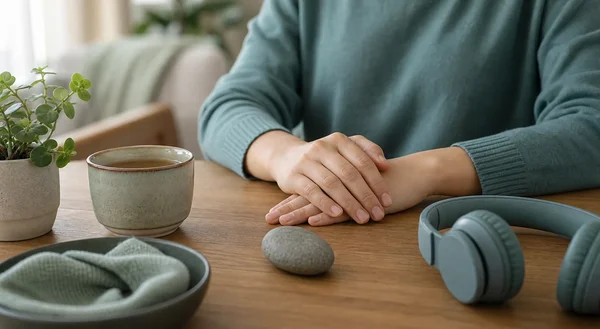
Try the 3-3-3 reset
The 3-3-3 rule is a simple grounding exercise. Name three things you can see, three sounds you can hear, and three parts of your body you can move. Move slowly and describe neutral details: the color of a wall, the hum of a fan, the feeling of your toes pressing into the floor.
This helps because anxiety often pulls attention into imagined outcomes. Grounding brings attention back to the present environment. It may not erase fear, but it can reduce the feeling of being trapped inside a thought loop.
Lengthen the exhale
Breathing advice can feel annoying when someone is panicking, so keep it practical. Do not force deep breaths. Instead, make the exhale a little longer than the inhale. For example, inhale gently for four counts and exhale for six to eight counts. Repeat for two minutes.
Longer exhales can signal the body to shift away from fight-or-flight intensity. If counting makes you feel more tense, try humming softly on the exhale or breathing out through pursed lips.
Reduce the next decision
Anxiety often makes ordinary decisions feel too large. Shrink the next step until it is almost too easy: sit down, loosen your jaw, drink water, send one text, step outside for two minutes, or write one sentence about what you are afraid might happen.
For someone else, offer two choices rather than open-ended advice: "Would you rather sit here quietly or walk to the kitchen with me?" Choice restores agency. Too many options can increase pressure.
How to Help With Anxiety When You Are Alone
Being alone with anxiety can make thoughts sound more convincing. A useful plan combines body cues, thought cues, and connection cues.
Start with the body. Change your physical state before debating the thought. Put both feet on the floor, lower your shoulders, sip water, splash your face with cool water, or walk slowly around the room. If you can, step into daylight or look out a window and name what is actually happening around you.
Then label the thought without treating it as a fact. Try: "I am having the thought that I will not cope." Or: "My brain is predicting danger." This creates a little distance. You do not need to win an argument with every anxious thought; you only need enough space to choose the next action.
Finally, add a connection cue. Text someone safe, use a crisis or support line if you feel at risk, or write down what you would say to a friend in the same situation. If anxiety is linked with thoughts of self-harm, feeling unsafe, or being unable to care for yourself, seek urgent local help or emergency support.
How to Help Someone With Anxiety Without Taking Over
Helping someone with anxiety requires steadiness, not control. The person may already feel embarrassed, overpowered, or afraid of being a burden. Your tone matters as much as your words.
Say less, steady more
Avoid debating whether the fear is rational. Anxiety is not usually calmed by being told to "just stop worrying." Better phrases are short and supportive:
- "I'm here with you."
- "You do not have to explain everything right now."
- "Let's slow the next minute down."
- "Would quiet, water, or a walk help?"
If the person wants to talk, listen for the need underneath the worry. They may need reassurance, problem-solving, space, or help contacting a professional. If they do not want to talk, staying nearby without pushing can still be helpful.
Offer practical choices
Support works best when it protects the person's autonomy. You can offer to sit with them, help them leave a crowded space, remind them to eat something simple, drive them home, or help write a message asking for support. If they use tools like a confidential anxiety score, treat the result as a reflection aid, not a label.
For a child or teen, keep language concrete. Instead of asking, "Why are you anxious?" try, "Where do you feel it in your body?" or "What part of tomorrow feels hardest?" For a partner or friend, ask what has helped before and what feels unhelpful. People with anxiety often know more about their patterns than they can explain during a difficult moment.

Build a Longer-Term Anxiety Support Plan
Immediate calming skills are useful, but long-term anxiety support usually depends on repeated, ordinary habits. The plan does not need to be perfect. It needs to be realistic enough to use on a normal day.

Map triggers, body signals, and routines
For one week, track three things: what happened before anxiety rose, what showed up in the body, and what helped even a little. Keep the notes brief. A pattern might look like late caffeine, poor sleep, skipped meals, conflict, social pressure, health searching, or avoiding one task until it feels enormous.
This kind of tracking is not about blaming yourself. It turns a vague emotional storm into information. Once you can see patterns, you can test small changes.
Use lifestyle supports without turning them into rules
Movement, sleep, regular meals, time outdoors, limited alcohol, moderate caffeine, and social contact can all support anxiety management. The risk is turning them into another checklist to fail. Start with one low-friction habit. A ten-minute walk counts. A simple breakfast counts. Putting the phone away ten minutes before bed counts.
Food may support general stability, especially when meals are regular and blood sugar is not swinging, but no single food reliably reduces anxiety fast for everyone. Treat nutrition as a foundation, not an emergency switch.
Know when professional support matters
Consider professional support when anxiety is frequent, intense, hard to control, linked with panic-like episodes, causing avoidance, disrupting sleep, affecting school or work, straining relationships, or leading to unsafe thoughts. Therapy, medical evaluation, and structured treatment options can be important, especially when self-help is not enough.
If you already take medication or have a care plan, follow the guidance of your clinician. Do not stop, change, or combine medications based on internet advice.
A Gentle Next Step When Anxiety Feels Hard to Name
Anxiety becomes easier to work with when you can describe it clearly. Ask: What am I feeling in my body? What thought keeps repeating? What am I avoiding? What would make the next hour 10 percent easier? If you are helping someone else, ask these questions softly and accept "I don't know" as a real answer.
You can also use a structured anxiety snapshot to reflect on symptom severity and prepare for a conversation with a professional, friend, or family member. The most helpful next step is usually not dramatic. It is one honest observation, one calming action, and one form of support that does not leave you carrying anxiety alone.
FAQ
How do I relieve anxiety fast?
Choose one simple grounding action: lengthen your exhale, name what you see and hear, put your feet on the floor, drink water, or move to a quieter place. Fast relief does not have to remove every anxious thought. It only needs to lower the intensity enough for your next safe choice.
What is the 3-3-3 rule of anxiety?
The 3-3-3 rule means naming three things you can see, three sounds you can hear, and three body parts you can move. It is a grounding exercise that redirects attention from racing thoughts to the present environment.
What are 5 warning signs of anxiety?
Five common warning signs are repeated worry, muscle tension, restlessness, trouble sleeping, and avoidance of situations that feel threatening. Some people also notice stomach discomfort, nausea, a racing heart, irritability, or trouble concentrating.
What is the best way to deal with my anxiety?
The best approach is usually a combination: calm the body in the moment, track patterns over time, reduce avoidable triggers, stay connected to supportive people, and seek professional guidance if anxiety is disrupting daily life. One tool rarely does everything.
How can I help someone having an anxiety attack?
Stay calm, use short sentences, reduce stimulation, and offer simple choices. You might say, "I'm here," "Let's breathe out slowly," or "Would you like to sit or walk?" If symptoms seem medically dangerous, the person feels unsafe, or you are unsure what is happening, seek urgent help.
Can food reduce anxiety fast?
Food can support overall stability, especially regular meals with enough protein, fiber, and hydration. But food is not usually a fast anxiety fix by itself. If anxiety is intense right now, grounding, breathing, a calmer environment, and support from another person may help more quickly.