How Accurate Is an Anxiety Test? The Science Behind Reliable Screening
Wondering if that free online anxiety test can actually tell you something meaningful about your mental health? You're not alone. In an era where anxiety test options flood search results, it's natural to question whether these digital tools provide reliable insights or just generic advice. The truth? Not all online assessments are created equal - but scientifically validated tools like our confidential anxiety screening offer clinically significant results worth your consideration.
Understanding the Science Behind Validated Anxiety Tests
What Makes an Anxiety Test Clinically Validated?
Unlike viral "personality quizzes," true clinical anxiety screenings undergo rigorous scientific testing. Researchers measure two critical factors:
- Reliability: Does the test produce consistent results across different administrations?
- Validity: Does it actually measure anxiety levels rather than temporary stress or other conditions?
At AnxietyTest.me, our assessment uses checks and balances that researchers call "psychometric testing" - the gold standard for mental health screening tools.

The GAD-7 Scale: The Gold Standard for Anxiety Screening
Our online anxiety test is built on the Generalized Anxiety Disorder 7-item (GAD-7) scale, which boasts:
- 89% sensitivity in detecting general anxiety disorder (Spitzer et al., 2006)
- 82% specificity in differentiating anxiety from related conditions
- Validation across 16 language groups and diverse populations
"The GAD-7 performs well as a screening tool," confirms a study in Annals of Internal Medicine.
Want to experience how clinical screening works? Take our free GAD-based assessment in under 3 minutes - no registration required.
How a Free Online Anxiety Test Stacks Up Against Professional Assessments
Key Differences Between Screening Tools and Diagnostic Instruments
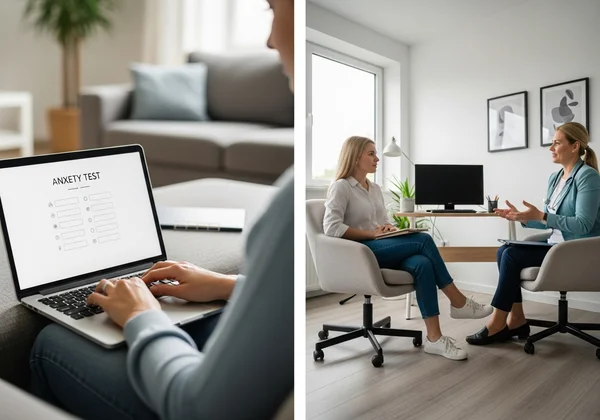
It's crucial to understand how an online anxiety test differs from a clinical evaluation:
| Feature | Online Anxiety Test | Professional Diagnosis |
|---|---|---|
| Purpose | Early detection | Confirmed diagnosis |
| Administration | Self-guided | Clinician-administered |
| Depth | Symptom snapshot | Holistic assessment |
| Outcome | Risk indication | Treatment recommendations |
The Accuracy Metrics of Popular Anxiety Screening Tests
When we analyze anxiety test accuracy, peer-reviewed research shows:
- GAD-7: 89% accuracy in primary care settings (Patient Health Questionnaire study)
- HADS-A: 80% accuracy detecting anxiety disorders
- STAI: 75% correlation with clinician assessments
Quick reality check: Our enhanced anxiety assessment aligns with GAD-7 benchmarks while providing more actionable insights than basic screeners.
Maximizing the Value of Your Anxiety Test Results
Interpreting Your Anxiety Score: What the Numbers Really Mean
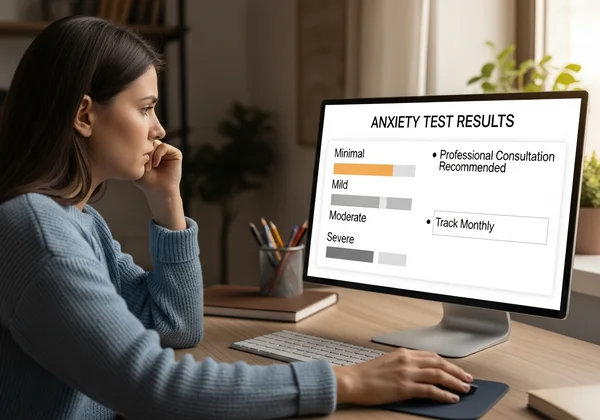
Your anxiety test score from AnxietyTest.me is more than just a number. Our scoring system:
- 0-4 (Minimal): Normal anxiety fluctuations
- 5-9 (Mild): Elevated but manageable symptoms
- 10-14 (Moderate): Consistent anxiety warranting attention
- 15+ (Severe): Professional consultation recommended
Pro Tip: Context matters! Track your anxiety score over time to understand patterns rather than relying on a single measurement.
When to Supplement Self-Testing with Professional Evaluation
Consider professional consultation if your results consistently show:
- Moderate or severe scores
- Physical symptoms impacting daily life
- Avoidance behaviors lasting weeks
- Relationship/work performance declines
Research indicates that a significant percentage of people who screen positive with validated tools are later confirmed to meet diagnostic criteria when they seek a professional evaluation.
The Takeaway
A clinically backed online anxiety test like our free anxiety screening tool serves as a powerful starting point—not an ultimate diagnosis. When built on rigorously validated instruments (like our GAD-7 foundation) and supplemented with detailed analysis, these tools bridge the gap between uncertainty and understanding.
Take the next step: Discover your current anxiety levels in complete privacy using our science-based self-assessment tool. You'll get: ✅ Immediate GAD-7 benchmarking ✅ Optional personalized coping strategies ✅ Clear guidance on next steps
Online Anxiety Test Accuracy
1. How accurate are online anxiety tests compared to in-person assessments?
High-quality digital screeners like ours achieve 80-90% alignment with preliminary clinical evaluations when using validated scales. Our confidential anxiety test mirrors the assessments many therapists use for initial screenings.
2. Can I trust the results from a free anxiety test?
You can trust tools that:
- Clearly state their clinical basis (like GAD-7 or HADS)
- Don't promise diagnoses
- Provide scientific references Our assessment checks all these boxes - try it free to see the difference.
3. What factors can affect anxiety test accuracy?
Be mindful of:
- Acute stressors before testing
- Physical conditions (like hyperthyroidism)
- Medication side effects
- Test-taker honesty
4. How often should I retake an anxiety test?
We recommend periodic check-ins using our assessment tool unless experiencing significant symptom changes. This helps build awareness of patterns while avoiding over-monitoring.
Disclaimer: This article provides general information only, not medical advice. Our tool is a screening aid, not a diagnostic device. Consult licensed professionals for health concerns.