Common Mental Disorders: A Practical Guide to Types, Symptoms, and Next Steps
Common mental disorders are often discussed as a simple list, but real life is usually more nuanced. A person may notice worry, low mood, sleep changes, irritability, panic sensations, concentration problems, or eating changes before they know what category might fit. Learning the broad types can make the next step feel less confusing, especially when the goal is education rather than labeling yourself. If anxiety is one of the symptoms you are trying to understand, a private anxiety self-check can offer a structured starting point while you decide whether professional support would be helpful.
What Counts as a Mental Disorder?
A mental disorder is generally understood as a clinically meaningful disturbance in thoughts, emotions, behavior, or development that causes distress or makes daily functioning harder. The important phrase is "clinically meaningful." Everyone has difficult days, but a mental health condition is usually more persistent, more impairing, or more intense than ordinary stress.
Mental disorders can affect relationships, school, work, sleep, appetite, energy, motivation, safety, and physical health. They can also overlap. For example, anxiety and depression may occur together, trauma can shape both mood and body responses, and substance use can complicate symptoms. That is why a list is useful, but it should not be treated as a final answer.
It is also helpful to separate education, screening, and professional care. Reading about common mental health disorders can help you name patterns. A screening tool can organize symptoms into a clearer snapshot. A licensed clinician can evaluate the full context, including history, medical factors, risk, duration, and impact.
Common Mental Disorders List: The Main Categories
Most common mental disorders lists include several broad groups. Different organizations use different classification systems, so the exact number changes depending on whether the source is written for the public, for clinicians, or for global health reporting.
Anxiety disorders
Anxiety disorders involve fear, worry, tension, avoidance, or physical arousal that becomes hard to control and interferes with life. Common examples include generalized anxiety disorder, panic disorder, social anxiety disorder, phobias, and separation anxiety disorder. Anxiety can show up as racing thoughts, muscle tension, restlessness, stomach discomfort, rapid heartbeat, trouble sleeping, or avoidance of situations that feel overwhelming.
Because anxiety symptoms can be confusing, many people start by using an educational tool. AnxietyTest.me offers an educational anxiety screening tool designed to help users reflect on symptom severity without treating the result as a medical conclusion.
Depressive disorders
Depression is more than a sad mood. It can involve loss of interest, low energy, sleep or appetite changes, slowed thinking, guilt, hopelessness, irritability, and difficulty functioning. Some people look withdrawn; others keep performing while feeling emotionally flat. Depression can also co-occur with anxiety, which is why mixed symptoms deserve careful attention.
Bipolar disorder
Bipolar disorder involves episodes of depression and episodes of mania or hypomania. During elevated mood states, a person may have unusually high energy, reduced need for sleep, racing thoughts, impulsive decisions, or increased activity. The pattern matters because treatment planning can differ from treatment for depression alone.
Trauma and stressor-related disorders
Post-traumatic stress disorder is one example in this group. It can develop after exposure to a threatening or overwhelming event. Symptoms may include intrusive memories, nightmares, avoidance, emotional numbness, irritability, or feeling constantly on guard. Not everyone who experiences trauma develops PTSD, and trauma responses can vary widely.
Obsessive-compulsive and related disorders
OCD is often misunderstood as liking cleanliness or order. In clinical terms, it involves intrusive thoughts, images, or urges, plus repetitive behaviors or mental rituals meant to reduce distress. Related conditions may involve body-focused repetitive behaviors or intense preoccupation with perceived flaws. These patterns can be time-consuming and distressing.
Eating disorders
Eating disorders involve serious disturbances in eating behavior, body image, weight concerns, or control around food. They can affect people of any body size and can carry medical risks. Common examples include anorexia nervosa, bulimia nervosa, and binge-eating disorder. Support often needs to address both mental and physical health.
Psychotic disorders
Psychotic disorders can involve hallucinations, delusions, disorganized thinking, or changes in perception and behavior. Schizophrenia is the best-known example, but it is not the most common mental disorder. Because these symptoms can greatly affect safety and functioning, timely professional support is especially important.
Neurodevelopmental disorders
Neurodevelopmental conditions begin during development and affect learning, attention, communication, behavior, or social functioning. ADHD and autism spectrum disorder are common examples. They are not simply childhood issues; many adults continue to need accommodations, skills, or support.

Common Mental Disorders by Age and Life Stage
Age matters because symptoms can look different across development. The same broad condition may appear as stomachaches in one person, anger in another, and withdrawal in another.
Common mental disorders in children
Children may show anxiety, ADHD, behavioral disorders, developmental differences, depression, trauma responses, or eating concerns. They may not have the words to explain what they feel, so adults may notice school refusal, sleep problems, clinginess, irritability, aggression, frequent reassurance seeking, or changes in appetite and play. Support often works best when caregivers, teachers, pediatric professionals, and mental health providers coordinate.
Common mental disorders in teens
Teens can experience anxiety disorders, depression, eating disorders, ADHD, trauma-related symptoms, substance use concerns, self-harm risk, and emerging mood or psychotic symptoms. Teen girls may be more likely to report internal distress such as anxiety, low mood, or body image concerns, while teen boys may be more likely to show irritability, risk-taking, or withdrawal, though any teen can show any pattern.
Adolescence is also a period when sleep, social pressure, academic expectations, identity, online life, and family stress can intensify symptoms. A teen who seems "dramatic" may actually be struggling with distress that deserves patient attention.
Common mental disorders in adults
Adults often search for information after symptoms begin affecting work, relationships, parenting, finances, or physical health. Anxiety, depression, substance use disorders, PTSD, ADHD, eating disorders, and bipolar disorder are common topics. Adults may also minimize symptoms because they are busy or because they have learned to function through discomfort.
Common mental disorders in women and men
Women are often discussed in relation to anxiety, depression, eating disorders, trauma exposure, and mental health changes around pregnancy, postpartum life, perimenopause, or caregiving stress. Men are often discussed in relation to substance use, anger, work stress, risk-taking, isolation, and lower help-seeking. These are population patterns, not rules. A useful article should leave room for individual differences, culture, safety, and access to care.
Common mental disorders in elderly adults
Older adults may experience depression, anxiety, grief-related distress, substance or medication complications, cognitive changes, sleep disruption, and loneliness. Symptoms may be mistaken for "normal aging," especially when they appear as fatigue, irritability, memory complaints, or loss of interest. Medical review can be important because pain, chronic illness, medication effects, hearing loss, and isolation can all shape mental health.
What Is the Most Common Mental Disorder?
Globally, anxiety and depressive disorders are often described as the most common mental disorders. Which one appears first depends on the data source, year, country, age group, and method of counting. For a reader, the practical point is not to win a ranking debate. It is to recognize that worry, fear, low mood, and loss of interest are common enough that nobody should feel alone for noticing them.
Schizophrenia is sometimes mentioned in searches about common mental disorders, but it is not among the most common by population count. It is included in major mental health lists because it can be severe, disabling, and stigmatized. "Common" and "serious" are different ideas: a condition can be less common and still require strong support.
What Symptoms Should Prompt More Support?
Consider reaching out to a healthcare or mental health professional when symptoms last for weeks, keep returning, feel intense, or interfere with ordinary life. Support is also important if symptoms affect school, work, eating, sleep, relationships, substance use, or safety.
Some signs deserve urgent attention: thoughts of self-harm, feeling unable to stay safe, hearing or seeing things others do not, extreme confusion, not sleeping for long periods with unusually high energy, or sudden major behavior changes. In those situations, contact local emergency services, a crisis line, or a trusted medical professional right away.
For less urgent concerns, a first step can be simple: write down what changed, when it started, what makes it better or worse, and how it affects daily life. That record can make a conversation with a professional clearer.

Common Treatment and Support Options
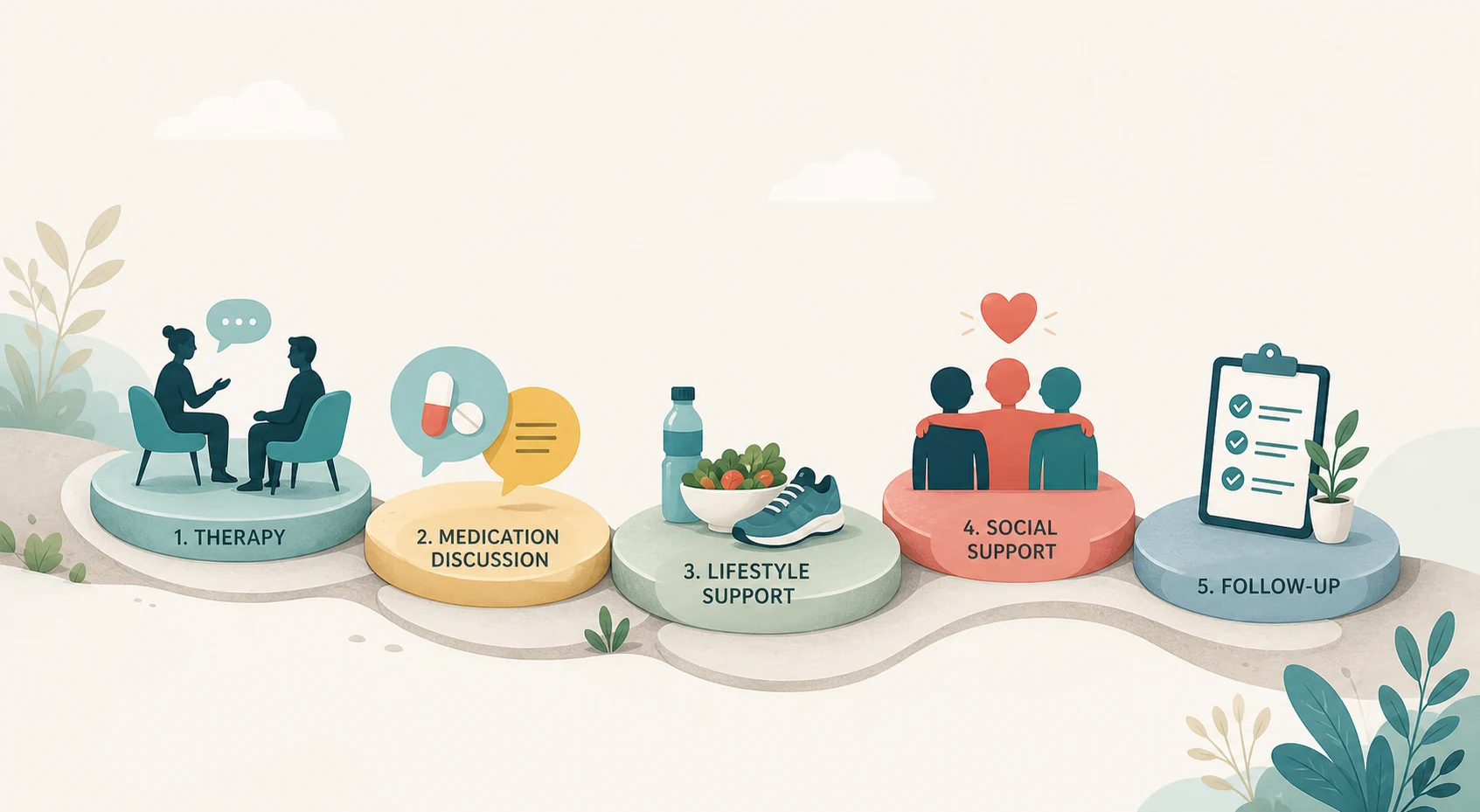
Common treatment for mental health disorders can include psychotherapy, skills-based approaches, medication when appropriate, lifestyle support, social support, family education, school or workplace accommodations, and coordinated medical care. The best plan depends on the person, condition, severity, preferences, risk level, and available services.
Therapy may help people understand patterns, practice coping skills, reduce avoidance, process trauma, improve relationships, or build routines. Medication may be considered for some conditions and should be discussed with a qualified prescriber. Peer support, sleep routines, exercise, reducing alcohol or drug use, and practical problem-solving can also matter, but they are usually part of a broader plan rather than a replacement for care.
It is reasonable to ask a provider questions: What patterns do you see? What options fit my symptoms? What should I watch for? How will we know whether this plan is helping? What should I do if things get worse?

How Anxiety Screening Fits Into the Bigger Picture
Common mental disorders can overlap, and anxiety symptoms are one of the most frequent reasons people look for mental health information. A screening result cannot explain every possible condition, but it can help you organize one part of the picture: how much recent worry, tension, fear, or restlessness may be affecting you.
If anxiety is part of your concern, you can review a quick anxiety severity snapshot as a low-pressure reflection tool. Use the result as a conversation starter, not a label. You might bring it to a therapist, doctor, school counselor, or trusted support person and add context about sleep, mood, trauma, attention, eating, substance use, medical issues, and recent stress.
FAQ
What are the 10 most common mental health disorders?
Public lists often include anxiety disorders, depressive disorders, bipolar disorder, PTSD, OCD, eating disorders, ADHD, autism spectrum disorder, substance use disorders, and psychotic disorders such as schizophrenia. Some lists also include personality disorders or disruptive behavior disorders. The exact top 10 depends on the classification system and population.
What are the 7 main mental disorders?
A simple seven-part educational list might include anxiety disorders, depressive disorders, bipolar disorder, trauma-related disorders, obsessive-compulsive disorders, eating disorders, and psychotic disorders. Other lists may group conditions differently, especially when they include neurodevelopmental or substance-related disorders.
What are the 12 major psychological disorders?
Some broad teaching lists include anxiety, depression, bipolar disorder, PTSD, OCD, eating disorders, schizophrenia spectrum disorders, personality disorders, ADHD, autism spectrum disorder, substance use disorders, and disruptive behavior disorders. These are categories for learning, not a personal conclusion.
What is the most common mental disorder worldwide?
Anxiety and depressive disorders are commonly described as the most widespread mental disorders worldwide. The ranking can vary by data source and year, but both are major public health concerns and both can affect daily functioning.
Are common mental disorders different in teens?
The categories overlap with adults, but teens may show symptoms through irritability, school avoidance, sleep shifts, social withdrawal, risk-taking, body image distress, or sudden changes in performance. Development, family context, social pressure, and safety should all be considered.
Is schizophrenia a common mental disorder?
Schizophrenia is less common than anxiety or depression, but it appears in major mental health lists because it can strongly affect perception, thinking, behavior, relationships, and daily functioning. Early professional support can make a meaningful difference.
When should someone seek professional help?
Seek professional support when symptoms persist, worsen, interfere with daily life, or raise safety concerns. Immediate help is important for self-harm thoughts, extreme confusion, possible psychosis, severe mood changes, or feeling unable to stay safe.