Anxiety Treatments - Options, At-Home Support, and When to Seek Help
Anxiety treatments can feel confusing when you are already tense, tired, or trying to make sense of symptoms that come and go. The helpful starting point is not to find one perfect answer, but to understand the main options and how they fit different needs. Therapy, medication, at-home coping skills, lifestyle changes, and professional support can all play a role. If you are still sorting out what your anxiety feels like day to day, a quick anxiety self-check can give you a private symptom snapshot to discuss with a trusted professional if needed.
What Anxiety Treatment Can Mean
Treatment for anxiety is usually not a single action. It is a plan that helps reduce symptoms, improve daily functioning, and make anxious moments easier to understand and manage. For one person, that plan may be weekly cognitive behavioral therapy. For another, it may include medication, sleep changes, exposure practice, or support for a related condition such as depression.
It also helps to separate three ideas. A treatment plan is the broader path. Coping skills are tools you use in the moment. Screening is a first step for noticing patterns, not a formal clinical evaluation. AnxietyTest.me fits in that third category: it offers a structured snapshot based on common screening frameworks, while the next decisions belong with the person, their context, and, when appropriate, a licensed professional.
The best treatment mix depends on symptom intensity, duration, personal history, access to care, and what anxiety is interrupting. Someone who avoids driving, social events, or work presentations may need a different approach than someone whose main issue is constant worry at night. The goal is to match support to the pattern instead of forcing every person into the same plan.
The Five Main Treatment Lanes
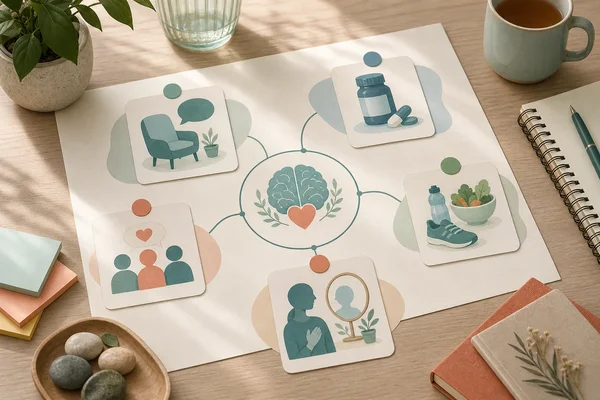
Most anxiety treatment options fall into five practical lanes. You do not have to use all of them, but seeing the map can make the choices less overwhelming.
1. Cognitive Behavioral Therapy and Related Therapies
Cognitive behavioral therapy, often called CBT, is one of the most widely used therapies for anxiety. It helps people notice the connection between thoughts, physical sensations, avoidance, and behavior. A therapist may help you test anxious predictions, practice new responses, and build skills that make daily life feel less controlled by worry.
Other therapy approaches can also help. Exposure-based therapy may be used when avoidance is keeping anxiety in place, such as avoiding driving, public speaking, elevators, or social settings. Acceptance and commitment therapy may focus on changing your relationship with anxious thoughts rather than arguing with every thought. Mindfulness-based approaches may help you notice sensations without immediately reacting to them.
2. Medication When Symptoms Need Extra Support
Medication can be part of anxiety treatment, especially when symptoms are persistent, severe, or tangled with sleep, depression, panic, or daily functioning. Common prescription categories include SSRIs and SNRIs, which are often used as longer-term options. Other medicines may be considered for specific situations, such as short-term severe anxiety, physical performance symptoms, or sleep disruption.
Medication choices should be made with a qualified clinician because benefits, side effects, timing, interactions, and personal health history matter. Medication is not a character judgment; it is one possible tool in a broader care plan.
3. Skills for Anxiety Treatment at Home
At-home support does not replace professional care when symptoms are intense, but it can make treatment more consistent. Small routines often matter more than dramatic changes. Useful home practices may include tracking triggers, reducing caffeine if it worsens symptoms, protecting sleep, moving your body regularly, practicing slower breathing, and planning what to do during high-anxiety moments.
A simple tracking note can include: what happened, what you felt in your body, what thought showed up, what you did, and what helped even a little. Over time, patterns become easier to see. That information can also make therapy or medical appointments more productive.
4. Online Anxiety Treatment and Digital Support
Online anxiety treatment can include video therapy, guided CBT programs, mental health apps, support communities, and educational resources. For people with limited local options, a busy schedule, or discomfort starting in person, online support may lower the barrier to help.
Digital tools vary widely, so it is worth checking whether a program explains its method, privacy practices, crisis limits, and professional oversight. A structured anxiety screening path can be a useful first step before exploring online care, especially if you want language for what you are experiencing without turning a private worry into a rushed decision.
5. Social and Practical Support
Anxiety often improves when the environment becomes more workable. That can mean telling one trusted person what is going on, asking for help with a stressful task, adjusting routines, or reducing avoidable overload. For students or workers, practical support might include clearer deadlines, smaller steps, or a plan for difficult meetings.
A short check-in, a written plan, or a ride to an appointment can make treatment easier to follow through on.

How to Reduce Anxiety in the Moment
Immediate skills are not a full treatment plan, but they can help you get through a spike. When anxiety rises quickly, the nervous system often needs simple, concrete cues.
Try lengthening your exhale for a few rounds: inhale gently, then exhale a little longer than you inhaled. You can also name three things you see, three sounds you hear, and three parts of your body you can move. This is often called the 3-3-3 rule, and its purpose is to bring attention back to the present.
For an anxiety attack, reduce the number of decisions you need to make. Sit somewhere stable, loosen tight clothing if comfortable, sip water, and remind yourself that the wave can pass even when it feels intense. If symptoms are new, unusually severe, include chest pain, fainting, or feel medically concerning, seek urgent medical help. Anxiety-like symptoms can overlap with physical health issues, so it is better to be cautious.
When you are alone, make the next step small. Send one message, step into a lit room, put both feet on the floor, or use a written plan you prepared earlier. If there is any risk that you might harm yourself or someone else, contact emergency services or a local crisis line right away.

Anxiety Treatment Without Medication
Many people look for anxiety treatment without medication because they prefer to start with therapy, skills, lifestyle changes, or professional guidance that does not involve prescriptions. That can be a reasonable path for some people, especially when symptoms are mild to moderate and daily functioning is still manageable.
Non-medication options may include CBT, exposure practice, mindfulness skills, exercise, sleep work, stress management, and support for specific triggers. These approaches can be powerful because they build repeatable skills. They may also combine well with medication later if symptoms remain disruptive.
However, “without medication” should not mean “without support.” If anxiety is limiting work, school, relationships, sleep, eating, travel, or basic responsibilities, it is worth talking with a qualified professional. A good plan can still respect your preferences while giving you more structure than trial and error.
Treatment for Anxiety and Depression Together
Anxiety and depression often overlap. A person may feel keyed up and exhausted at the same time, worry constantly but struggle to act, or avoid responsibilities and then feel worse because life is piling up. When both are present, treatment usually needs to look at mood, motivation, sleep, thinking patterns, and safety together.
Therapy can help identify whether worry, avoidance, low mood, or self-criticism is driving the cycle. Medication may be considered when symptoms are persistent or when depression is making it hard to use coping skills. Practical support also matters: regular meals, sleep routines, movement, and connection can give treatment a stronger base.
If depression includes thoughts of self-harm, hopelessness that feels hard to resist, or feeling unsafe, that is not a wait-and-see situation. Reach out to emergency services, a crisis line, or a trusted person who can stay with you while you get help.
How to Choose Your Next Step
Choosing among anxiety treatments becomes easier when you start with severity and impact. Ask yourself: How long has this been going on? What am I avoiding? What does anxiety interrupt? What have I already tried? What feels realistic this week?
If symptoms are mild and recent, at-home skills and education may be a practical first layer. If anxiety is persistent, keeps returning, or affects work, school, relationships, or health routines, therapy is worth considering. If symptoms are severe, include frequent panic, intense sleep disruption, or overlap with depression, a medical or mental health professional can help you weigh a more complete plan.
It can also help to bring notes rather than relying on memory. Write down your main symptoms, triggers, sleep changes, caffeine or substance use, current medications or supplements, and what you hope treatment will change. This turns a vague problem into something easier to discuss.
A Gentle First Step Before a Bigger Treatment Decision
If you are not sure where you fit, begin with observation rather than pressure. Notice what anxiety feels like, how often it appears, and what it changes in your day. A private symptom snapshot can help you organize those observations before you decide whether to explore therapy, medication, online support, or a conversation with a clinician.
Anxiety treatments work best when they are matched to real life. The right next step may be small: one appointment, one tracking note, one grounding plan, or one conversation with someone you trust. You do not need to solve everything at once to move in a better direction.

FAQ
What are five treatments for anxiety?
Five common treatment options are cognitive behavioral therapy, exposure-based therapy, prescription medication when appropriate, at-home coping routines, and social or practical support. Many plans combine more than one option. The best fit depends on symptom severity, goals, access to care, and whether anxiety overlaps with depression, panic, trauma, substance use, or medical concerns.
How do you cope with anxiety day to day?
Daily coping usually works best when it is simple and repeatable. Track triggers, protect sleep, limit stimulants if they worsen symptoms, move your body, practice slower breathing, and reduce avoidance in small steps. It also helps to prepare a short plan for high-anxiety moments so you are not inventing one while already overwhelmed.
What is the 3-3-3 rule for anxiety?
The 3-3-3 rule is a grounding exercise. You name three things you can see, three sounds you can hear, and three body parts you can move. It does not erase anxiety, but it can shift attention back to the present and give your nervous system a steadier cue during a spike.
What can I take for anxiety over the counter?
There is no over-the-counter product that should be treated as a full anxiety treatment. Some people ask about supplements, sleep aids, or herbal products, but these can cause side effects or interact with medications. Ask a pharmacist or clinician before using them, especially if you are pregnant, have health conditions, or take prescriptions.
Can anxiety treatment at home be enough?
At-home strategies may be enough for some mild, recent, or situational anxiety, especially when they improve sleep, reduce avoidance, and help you feel more steady. If anxiety persists, worsens, or limits daily life, professional support can add structure and make the plan more effective.
How do I deal with anxiety when I am alone?
Use a small, concrete plan: sit somewhere stable, slow your breathing, name what is around you, drink water, and message one trusted person if possible. If you feel unsafe or might harm yourself or someone else, contact emergency services or a local crisis resource right away.