Anxiety Attack Symptoms in Women: Female Physical Signs, Panic vs Anxiety, and When to Get Help
If you searched for anxiety attack symptoms female, you may be trying to make sense of a frightening mix of racing thoughts, body sensations, and "Is this serious?" doubt. Anxiety can feel emotional, physical, or both at once. For many women, an intense episode may include a pounding heart, tight chest, shortness of breath, nausea, dizziness, trembling, sweating, or a feeling that something terrible is about to happen.
This guide explains common symptoms, how an anxiety attack differs from a panic attack, what can overlap with heart-related warning signs, and what may help in the moment. It is educational only and cannot tell you what is happening in your body. If your symptoms are new, severe, one-sided, linked with chest pressure, or feel medically unsafe, seek urgent care. If you want a gentle way to reflect on recent anxiety patterns later, a quick anxiety self-check can help organize what you have been noticing.

What People Mean by an Anxiety Attack
"Anxiety attack" is a common phrase, but it is not always used the same way. Some people use it to describe a sudden spike of worry during a stressful moment. Others use it for a wave of symptoms that looks very similar to a panic attack.
A panic attack is usually more abrupt and intense. It often rises quickly, peaks within minutes, and can feel out of proportion to the situation or even appear without an obvious trigger. A broader anxiety attack may build more gradually around a worry, conflict, work pressure, health fear, relationship stress, or a long period of overload.
In real life, the labels matter less than the pattern. Notice what happened before the episode, how quickly it came on, what body symptoms showed up, how long it lasted, and whether fear of another episode is changing your behavior. Those details are more useful than forcing the experience into a perfect category.
Common Female Anxiety Attack Symptoms
Anxiety attack physical symptoms in females can show up from head to stomach to hands. They are uncomfortable because the body is preparing for threat, even when the threat is emotional, uncertain, or not immediately visible.
Common physical symptoms may include:
- Fast, pounding, or fluttering heartbeat
- Chest tightness, pressure, or discomfort
- Shortness of breath, rapid breathing, or feeling smothered
- Sweating, chills, hot flashes, or trembling
- Nausea, stomach pain, diarrhea, or a "knot" in the stomach
- Dizziness, light-headedness, weakness, or feeling faint
- Tingling, numbness, shaky hands, or muscle tension
- Dry mouth, headache, fatigue, or trouble sleeping afterward
Common mental and emotional symptoms may include:
- A surge of fear, dread, or danger
- Feeling out of control
- Racing thoughts or inability to focus
- Fear that you might pass out, lose control, or die
- Feeling detached from your body or surroundings
- Strong urge to escape the place or situation
Women do not all experience the same symptom profile. Some notice breathing-related symptoms first. Others mainly notice stomach upset, shakiness, crying, irritability, or mental spiraling. Hormonal shifts, sleep loss, caregiving stress, trauma history, chronic pain, caffeine, alcohol, medications, and other health conditions can also shape how anxiety feels.
If you are tracking symptoms across days, write down the symptom, time, likely trigger, menstrual-cycle timing if relevant, caffeine or alcohol use, sleep quality, and what helped. A structured anxiety severity snapshot can be useful when you want to compare those notes with a simple screening-style reflection.

Anxiety Attack vs Panic Attack: Key Differences
People often search for anxiety attack symptoms female vs panic attack because the experiences overlap. Both can involve a racing heart, fast breathing, sweating, trembling, nausea, dizziness, chest discomfort, and fear. The difference is often the timing, intensity, and trigger pattern.
An anxiety attack usually has a clearer buildup. You might be worried for hours or days, then feel symptoms surge during a meeting, argument, health search, crowded place, or quiet moment when your mind finally catches up with stress.
A panic attack often feels more sudden. It may hit while you are driving, shopping, lying in bed, or sitting still. The intensity can feel extreme, and the fear may center on losing control, dying, or needing to escape. Afterward, people may feel drained and start avoiding places where a previous episode happened.
Neither label means you are weak. Both experiences can be part of a stress response that has become too sensitive. The more practical question is: Are these episodes recurring, interfering with life, or making you avoid normal activities? If yes, it is worth speaking with a qualified health professional.
When Symptoms Could Be Something More Urgent
Some anxiety symptoms can feel similar to heart, breathing, thyroid, medication, blood sugar, or other medical problems. This is especially important for women because heart attack symptoms may include chest discomfort, shortness of breath, nausea, unusual fatigue, back or jaw discomfort, arm or shoulder pain, light-headedness, or anxiety-like unease.
Do not try to self-sort a possible emergency. Seek urgent medical help if you have:
- Chest pressure, squeezing, heaviness, or pain that is new, severe, or spreading
- Shortness of breath that is severe, unusual, or not settling
- Pain or discomfort in the jaw, neck, back, shoulder, or arm
- Fainting, severe weakness, confusion, or bluish lips
- Symptoms with pregnancy, recent birth, known heart disease, blood clot risk, or a new medication reaction
- A first-ever episode that feels unlike anything you have had before
If a clinician has already evaluated similar episodes and you have a plan, follow that plan. If you are unsure, it is safer to get checked than to assume anxiety is the cause.
What Causes Anxiety Attacks in Women?
There is rarely one single cause. Anxiety attacks can come from a mix of nervous-system sensitivity, current stress, past experiences, physical health, substances, and learned fear of symptoms.
Possible contributors include:
- Ongoing stress from work, school, caregiving, finances, or relationships
- Poor sleep, skipped meals, dehydration, or heavy caffeine use
- Hormonal changes around menstrual cycles, pregnancy, postpartum periods, perimenopause, or menopause
- Trauma reminders, grief, or chronic high-alert states
- Medical conditions that can mimic or worsen anxiety symptoms
- Alcohol, cannabis, stimulants, withdrawal, or medication side effects
- Fear of body sensations after a previous frightening episode
This does not mean the symptoms are "all in your head." Anxiety involves the brain, body, hormones, breathing, muscles, digestion, and attention. The sensations are real, even when the trigger is not dangerous.
How to Calm an Anxiety Attack in the Moment
The goal is not to force symptoms away instantly. That pressure can make the spiral tighter. Aim to lower the alarm signal, reduce unsafe behaviors, and give your body time to come down.
Try this sequence:
- Name what is happening: "This may be anxiety, and I can take the next minute slowly."
- Check safety: if symptoms could be urgent or medically new, seek help.
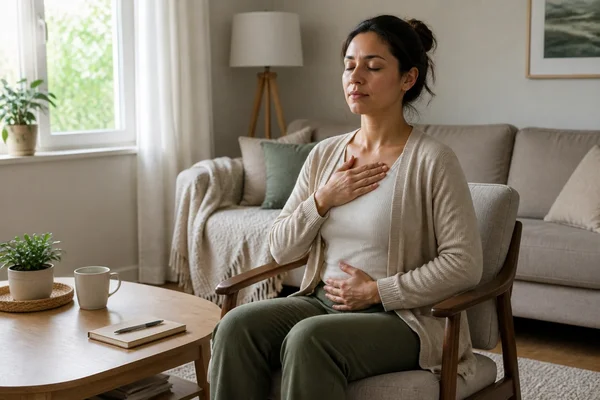
- Slow the exhale: breathe in gently, then make the exhale longer than the inhale for several rounds.
- Ground through the senses: name five things you see, four you feel, three you hear, two you smell, and one you taste.
- Relax one muscle group at a time: unclench your jaw, lower your shoulders, soften your hands, and place both feet on the floor.
- Reduce stimulation: step away from crowds, screens, caffeine, or conflict if you can do so safely.
- Use a steady phrase: "This is intense, but it can pass. I do not have to solve everything right now."
After the episode, avoid turning the rest of the day into a full investigation unless there is a medical concern. Drink water, eat something balanced if you skipped a meal, take a gentle walk, and write a few notes. Reviewing patterns later is usually more useful than searching symptoms repeatedly while your body is still activated.
Anxiety Spiral Symptoms to Watch For
An anxiety spiral happens when a sensation or thought becomes the trigger for more fear. For example, you notice a skipped heartbeat, then worry it is dangerous, then your body releases more adrenaline, then your heart beats faster, which seems to "prove" the fear.
Common spiral signs include:
- Rechecking symptoms again and again
- Searching the internet for reassurance but feeling worse
- Avoiding normal activities because they raise your heart rate
- Asking others for repeated reassurance
- Scanning your body every few minutes
- Treating every sensation as a warning sign
Breaking the spiral often means changing the response, not arguing with every thought. You might set a timer before checking again, move your attention to a task, practice slow breathing, or write down one balanced statement: "This symptom is uncomfortable. If it becomes severe, new, or unsafe, I will get help. For now, I will give my body ten minutes."
Treatment and Support Options for Recurring Episodes
Anxiety attack symptoms female treatment searches often come from people who are tired of waiting for the next episode. Support can include therapy, skills practice, lifestyle changes, medical evaluation, or medication when appropriate.
A health professional may ask about symptom timing, medical history, medications, caffeine or substance use, sleep, stress, trauma, mood, and whether symptoms interfere with daily life. Therapy approaches may help you understand triggers, reduce avoidance, practice exposure to feared sensations, and change the way you respond to spirals. Medication may be discussed for some people, especially when symptoms are frequent, severe, or paired with depression or panic disorder.
Daily foundations also matter. Regular meals, sleep routines, movement, lower caffeine intake, social support, and reducing alcohol or stimulant use can make the nervous system less reactive. These steps are not instant fixes, but they can lower the baseline that makes attacks more likely.
A Low-Pressure Next Step for Understanding Your Pattern
If the episode has passed and there is no urgent medical concern, the next useful step is to organize what you noticed. Ask yourself: What did I feel in my body? What was I afraid would happen? How quickly did it peak? What was happening in the hours before it started? Did I avoid anything afterward?
AnxietyTest.me is designed as a confidential, educational first step for people who want a quick anxiety severity snapshot and clearer next-step reflection. It is not a replacement for professional care, and it should not be used to decide whether a medical emergency is safe to ignore. Used at the right time, a confidential anxiety screening tool can help you put recent symptoms into a more structured format before you decide whether to keep tracking, talk with someone you trust, or bring notes to a clinician.

FAQ
What are the warning signs of an anxiety attack?
Warning signs can include racing thoughts, intense worry, a pounding heart, tight chest, shortness of breath, sweating, trembling, nausea, dizziness, tingling, muscle tension, and a strong urge to escape. If symptoms are new, severe, or feel medically unsafe, get medical help instead of assuming anxiety.
What does a panic attack feel like?
A panic attack often feels like a sudden wave of intense fear with strong body symptoms. People may feel a racing heart, shortness of breath, chest discomfort, trembling, dizziness, chills, nausea, unreality, or fear of dying. It can be frightening even when there is no immediate danger.
Are anxiety attack symptoms different in females?
The core symptoms can be similar across genders, but women may notice different combinations, including breathing difficulty, faintness, stomach symptoms, fatigue, sleep disruption, or symptoms shaped by hormonal changes. Individual pattern matters more than gender alone.
How do I calm down from an anxiety attack?
First, consider safety. If symptoms could be urgent, seek help. If they fit a familiar anxiety pattern, slow your exhale, ground through your senses, relax your muscles, reduce stimulation, and use a steady phrase such as, "This is intense, but it can pass."
Can anxiety feel like a mini heart attack?
Anxiety can cause chest tightness, fast heartbeat, sweating, nausea, shortness of breath, and dizziness, which can feel similar to heart-related symptoms. Because overlap is real, new or severe chest pressure, spreading pain, fainting, severe breathlessness, or unusual weakness needs urgent medical attention.
What are weird physical symptoms of anxiety?
People may notice tingling, numbness, hot flashes, chills, throat tightness, stomach upset, dry mouth, shaky legs, derealization, muscle twitching, or a floating feeling. These can happen with anxiety, but new or worsening symptoms still deserve medical review.
When should I talk to a professional?
Consider talking to a qualified professional if episodes repeat, interfere with work or relationships, make you avoid normal activities, disrupt sleep, appear with depression, or lead to frequent reassurance seeking. Bring notes about timing, symptoms, triggers, and what helped.