Anxiety at Night: Why It Happens and How to Calm It Before Sleep
Anxiety at night can feel confusing because the day may finally be quiet, yet your mind and body seem to get louder. You might notice racing thoughts, a tense chest, a sudden rush of anxiety when falling asleep, or the frustrating loop of feeling anxious and unable to sleep. For many people, nighttime anxiety is not a sign that something is "wrong" with them. It is often a mix of stress, sleep habits, body rhythms, and reduced distractions. If you want a private way to reflect on your current anxiety pattern, an educational anxiety self-check can be a gentle starting point while you decide what support might help.
What Anxiety at Night Can Feel Like
Night anxiety can show up as mental, physical, and sleep-related symptoms. Mentally, it may feel like racing thoughts, replaying conversations, worrying about tomorrow, or sensing that one small concern has grown larger as soon as you lie down. Some people describe it as overthinking at night, while others feel a vague sense of dread without a clear reason.
Physically, anxiety before bed may come with a pounding heart, shallow breathing, tight muscles, sweating, stomach discomfort, jaw tension, or restlessness. These sensations can be especially noticeable in a dark, quiet room because there is less daytime noise to compete with them.
Sleep-wise, anxiety can make it hard to fall asleep, stay asleep, or return to sleep after waking. You may wake up anxious in the middle of the night, wake up in a panic, or start fearing the bed itself because it has become associated with frustration. That fear of falling asleep can become its own stressor, even when the original worry is unclear.
Why Anxiety May Feel Worse at Night
Nighttime anxiety often builds from several smaller factors rather than one dramatic cause. During the day, tasks, conversations, commuting, childcare, or screens can occupy attention. At night, the mind has more open space, so unfinished worries can become more vivid.
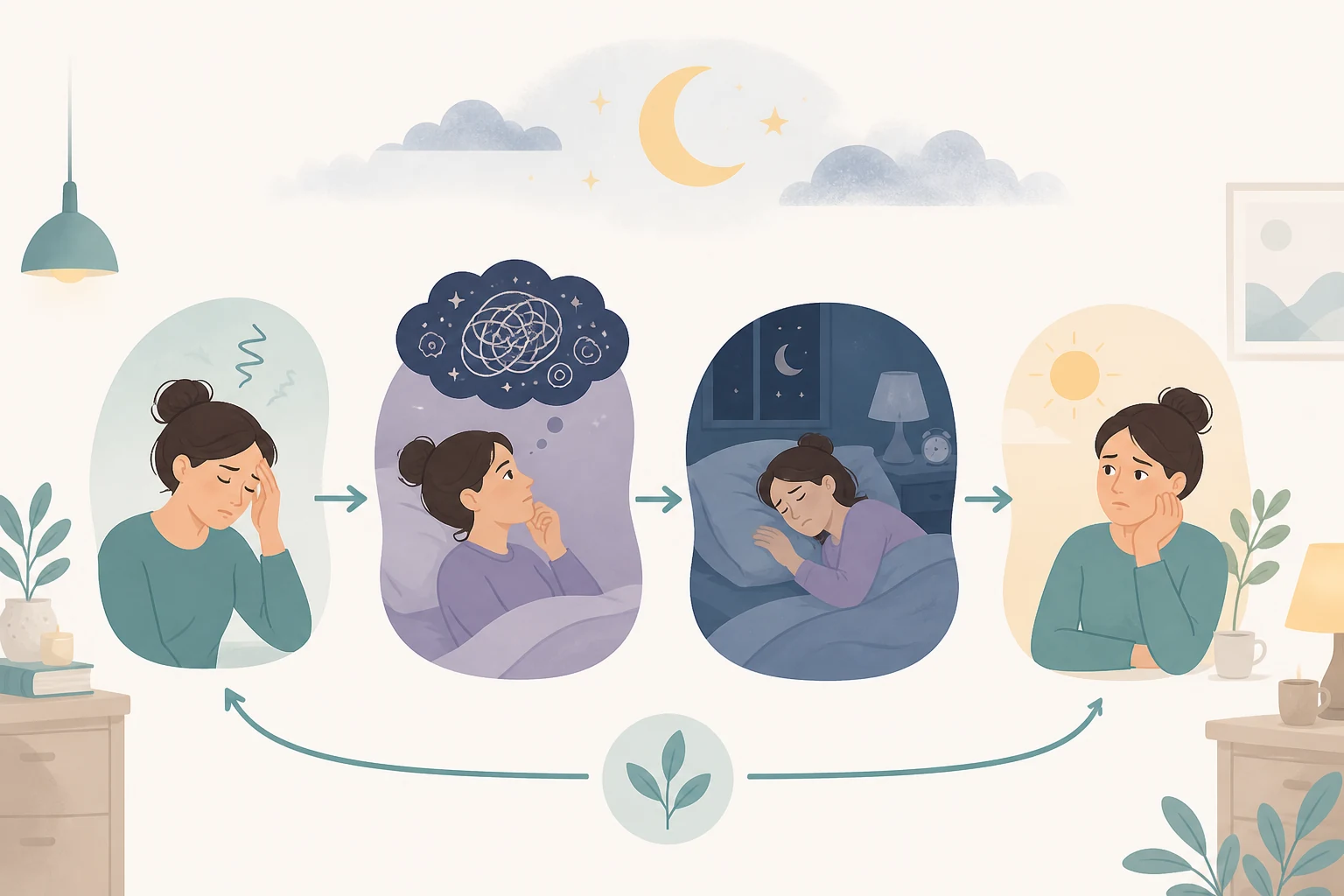
Sleep pressure also changes how the body reacts. When you desperately want to sleep, every sign of wakefulness can feel like evidence that the night is going badly. The thought "I can't sleep because of anxiety" may trigger more alertness, which makes sleep even harder.
The body clock matters too. Circadian rhythms influence alertness, temperature, hormones, and mood across the day. If your sleep schedule is irregular, you use bright screens late, or you consume caffeine too close to bedtime, the brain may not receive a clear signal that the day is ending. Stress and sleep then reinforce each other: anxiety can disrupt sleep, and poor sleep can make anxiety harder to manage the next day.
Hormonal changes can also play a role for some people. Perimenopause, menstrual cycle shifts, postpartum changes, thyroid concerns, medication changes, and other health factors can affect sleep, body temperature, heart rate, and emotional steadiness. If anxiety at night feels new, intense, or tied to physical changes, it is worth discussing the pattern with a qualified professional.
How to Calm Anxiety at Night Naturally
The goal is not to force sleep. The goal is to lower arousal and give the brain consistent cues that the bed is not a problem to solve. Start with a small routine you can repeat most nights.
First, create a wind-down buffer. For 30 to 60 minutes before bed, dim lights, reduce stimulating content, and choose low-effort activities such as reading, stretching, quiet music, or a warm shower. If screens are unavoidable, lower brightness and avoid content that invites debate, comparison, or urgency.
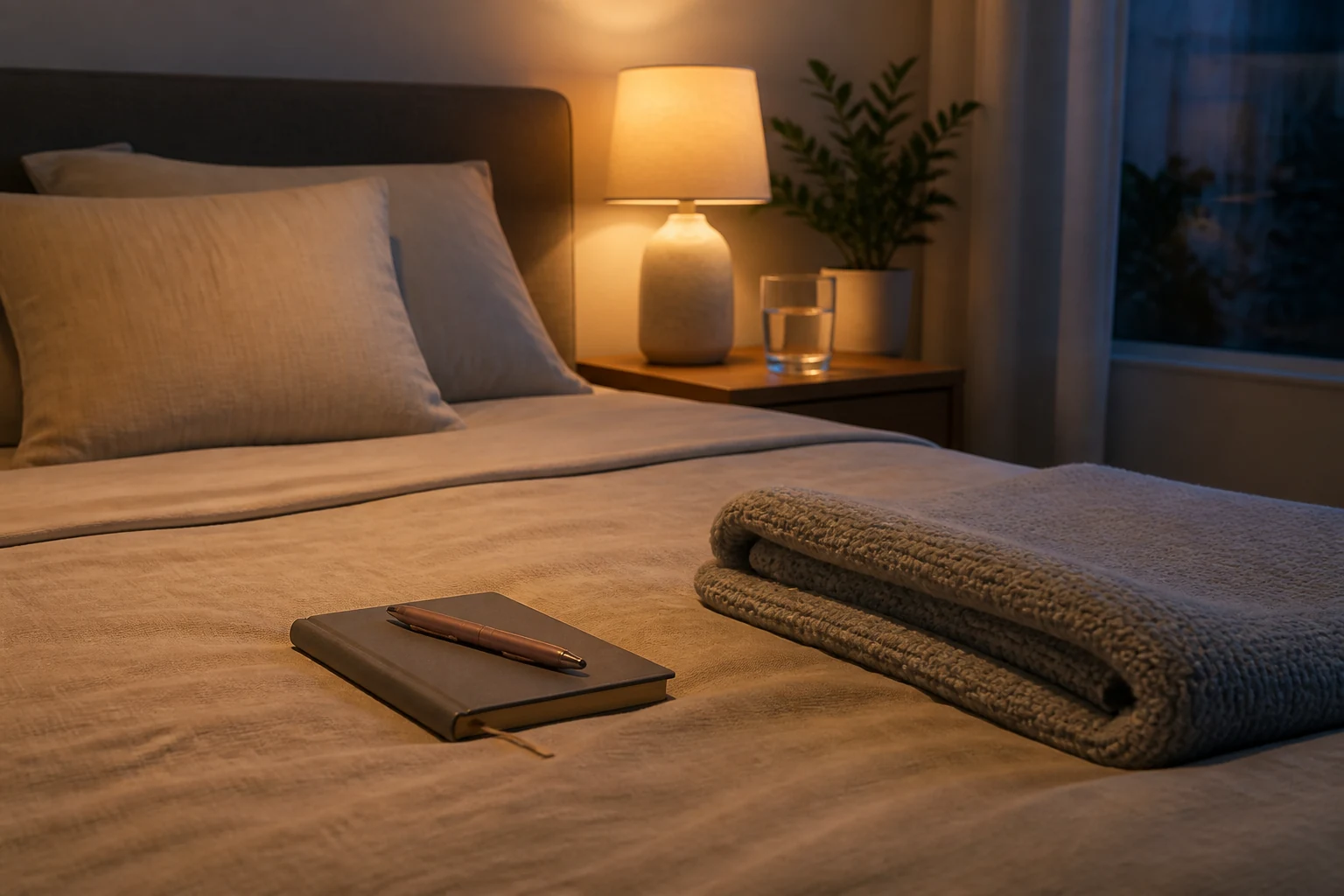
Second, move worry out of bed. Keep a notebook nearby and write a short "parking list": what is on your mind, one next step if needed, and when you will revisit it. This works best when it is boring and brief. You are not trying to solve your whole life at midnight; you are giving your mind proof that the thought has been captured.
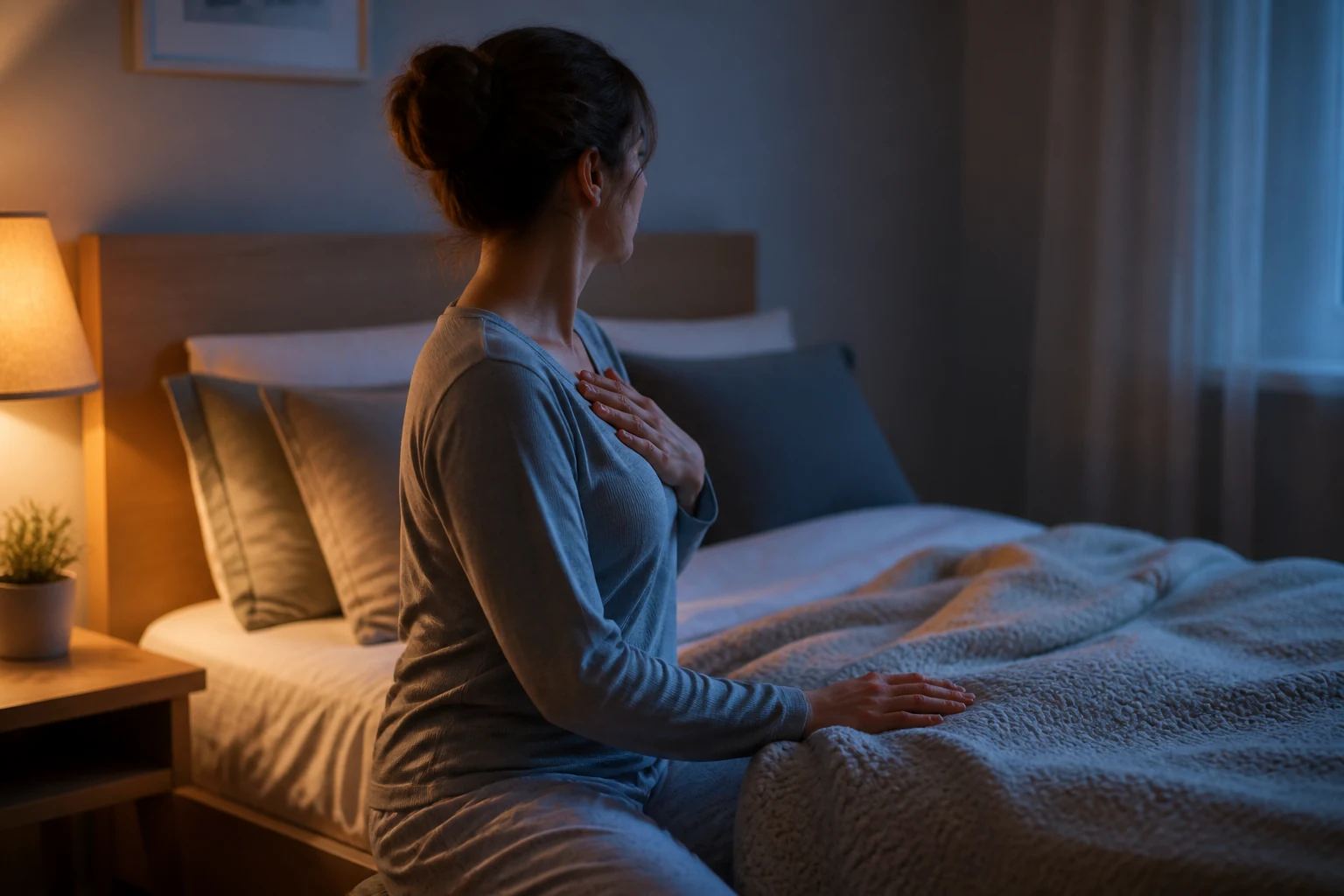
Third, use your body as an anchor. Slow breathing, progressive muscle relaxation, or a short body scan can soften the fight-or-flight response. For breathing, try inhaling gently through the nose and extending the exhale slightly longer than the inhale. If counting becomes stressful, drop the numbers and focus only on making the out-breath slow and comfortable.
Fourth, make the room sleep-friendly. A cool, dark, quiet space can reduce sensory friction. Keep the bed mainly for sleep and intimacy when possible, so the brain does not learn that bed is where you work, scroll, argue, or monitor the clock.
Fifth, review the daytime pieces. Morning light, regular meals, movement, reduced late caffeine, and a steady wake time can do more for nighttime anxiety than another complicated bedtime trick. If you want to understand whether your night anxiety is part of a broader pattern, a quick severity snapshot may help you organize what you have been noticing before a conversation with a professional.
What to Do When You Wake Up Anxious
Waking up anxious can be unsettling because it seems to arrive before your thoughts fully do. If you wake with a racing heart or tight chest, begin by orienting to the present: notice the room, the mattress, the temperature, and the fact that you are awake in a specific place at a specific time.
The 3-3-3 rule can help some people shift attention away from spiraling thoughts. Name three things you can see, three sounds you can hear, and move three parts of your body gently. It is not a sleep command. It is a grounding exercise that reminds the nervous system that the present moment is more specific than the worry story.
If you are still wide awake after about 20 minutes, consider leaving the bed for a quiet, dim activity. Read something neutral, sit with a blanket, or listen to calm audio. Return to bed when sleepiness returns. This helps protect the bed from becoming a place where you rehearse frustration.
Is It Anxiety, Sleep Anxiety, or a Nocturnal Panic Attack?
These experiences can overlap, but the pattern matters. Anxiety at night often involves worry, rumination, muscle tension, and difficulty falling or staying asleep. Sleep anxiety is more specifically fear or worry about sleep itself, such as fear of sleeplessness, fear of nightmares, or fear of what might happen if you do not sleep.
A nocturnal panic attack can feel more sudden and intense. People may wake from sleep with a pounding heart, sweating, trembling, shortness of breath, chills, chest discomfort, nausea, dizziness, or a feeling of impending doom. These sensations can be frightening. They can also resemble physical health concerns, so new, severe, or unusual symptoms deserve medical attention, especially chest pain, fainting, breathing difficulty, or symptoms that feel unlike your usual anxiety pattern.
Whether the experience is mild nighttime worry or repeated panic-like awakenings, tracking details can help. Note bedtime, wake time, caffeine, alcohol, exercise, medications or supplements, stressful events, menstrual or perimenopause symptoms if relevant, and what helped. A pattern over one or two weeks is often more useful than one desperate memory from a bad night.
When Night Anxiety Needs More Support
Self-care is useful, but it should not become another reason to blame yourself. Consider reaching out for professional support if anxiety at night is happening most nights, sleep loss is affecting work or relationships, you are avoiding bedtime, you rely heavily on alcohol or sedating substances to sleep, or panic-like symptoms are recurring.
Support may include therapy, cognitive behavioral therapy for insomnia, anxiety-focused coping skills, treatment for an underlying sleep issue, medication review, or medical evaluation for physical contributors. The right next step depends on your history, symptoms, and safety needs.
Seek urgent help right away if you might harm yourself, feel unable to stay safe, or have severe physical symptoms such as chest pain or trouble breathing. Educational articles can offer language and options, but they cannot replace individualized care.
Use Night Anxiety as a Signal, Not a Verdict
Anxiety at night can make the future feel smaller than it is. A hard night does not mean every night will be the same, and waking up anxious does not mean you have failed at sleep. It means your body and mind may need clearer cues, less pressure, and sometimes more support.
Start with one change for the next three nights: a written worry list, a steady wake time, a dimmer wind-down, or a grounding practice when you wake. If you want to organize your symptoms and reflect on how anxiety is affecting your daily life, a private starting point for reflection can help you name the pattern without treating an online result as a final answer.
FAQ
What helps with anxiety at night?
A predictable wind-down routine, dim light, reduced late caffeine, a short worry list, slow breathing, and getting out of bed for a quiet activity when you are wide awake can all help. The most useful approach is usually simple and repeatable rather than dramatic.
Why is my anxiety so bad at night?
Night can remove distractions, leaving more room for rumination. Poor sleep, irregular schedules, late screens, caffeine, alcohol, stress, hormonal shifts, and fear of another bad night can all intensify anxiety before bed.
What is the 3-3-3 rule for anxiety sleep?
The 3-3-3 rule is a grounding exercise: notice three things you can see, three sounds you can hear, and gently move three body parts. It may help shift attention back to the present when thoughts are racing.
Why do I get anxiety before bed for no reason?
Sometimes the reason is not obvious because the trigger is accumulated stress, body tension, sleep pressure, or a learned association between bed and worry. If the pattern is new, severe, or persistent, consider discussing it with a qualified professional.
Can lack of sleep cause anxiety?
Poor sleep can make emotions harder to regulate and can increase stress sensitivity the next day. Anxiety can also make sleep harder, creating a cycle. Improving sleep habits and addressing anxiety together is often more effective than treating them as separate problems.
Can you have panic attacks in your sleep?
Some people do wake from sleep with sudden panic-like symptoms. Because these sensations can overlap with medical concerns, it is wise to seek medical advice if symptoms are new, intense, recurrent, or include chest pain, fainting, or breathing difficulty.
How do I stop racing thoughts at night?
Try writing thoughts down before bed, scheduling a daytime worry window, using a short grounding exercise, and avoiding clock-watching. If thoughts keep returning, respond with a consistent phrase such as "I have captured this for tomorrow" and return attention to the body.